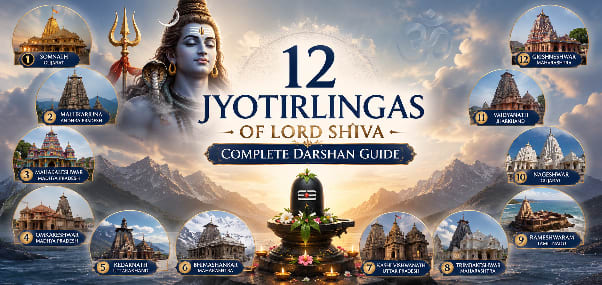
12 Jyotirlingas of Lord Shiva: Complete Darshan Guide
Bharat is home to twelve sacred shrines known as the Jyotirlingas, where Lord Shiva is worshipped in his form of divine light. For millions of devotees, completing darshan at all twelve is a lifelong wish and one of the most meaningful aspects of the pilgrimage in Sanatan Dharma.
This guide walks you through each of the twelve Jyotirlingas, their exact locations, darshan timings, and practical travel tips, so you can plan your own yatra with confidence and clarity. You can explore temple profiles, panchang details, and puja booking on DevMarg, India's trusted spiritual companion.
Key highlights
- There are 12 Jyotirlingas of Lord Shiva spread across 9 Indian states.
- Somnath in Gujarat is traditionally considered the first, and Grishneshwar near Ellora the last.
- Maharashtra has the most Jyotirlingas among all states, with four shrines.
- A full circuit typically takes between 15 and 24 days, depending on the route and mode of travel.
What Are the 12 Jyotirlingas of Lord Shiva?
The 12 Jyotirlingas are Somnath in Gujarat, Mallikarjuna in Andhra Pradesh, Mahakaleshwar and Omkareshwar in Madhya Pradesh, Kedarnath in Uttarakhand, Bhimashankar, Trimbakeshwar and Grishneshwar in Maharashtra, Kashi Vishwanath in Uttar Pradesh, Vaidyanath in Jharkhand, Nageshwar in Gujarat, and Rameshwaram in Tamil Nadu.
Each of these temples marks a place where Lord Shiva is believed to have manifested as a jyotirlinga, a column of light without beginning or end. Together, they form one of the most significant pilgrimage circuits in Hindu tradition.
The Story Behind the Jyotirlingas
According to the Shiva Purana, Lord Brahma and Lord Vishnu once argued over who among them held supreme power. To settle the dispute, Shiva appeared as an endless pillar of light and challenged both to find its beginning or end. Vishnu admitted he could not find the source, while Brahma falsely claimed he had, which led Shiva to reveal the truth and establish these twelve sites as eternal reminders of his infinite nature.
This is why each Jyotirlinga is seen not simply as an idol but as a direct manifestation of Shiva himself, and why devotees consider darshan here especially powerful for spiritual growth and the removal of sins.
Quick Reference: All 12 Jyotirlingas and Their Locations
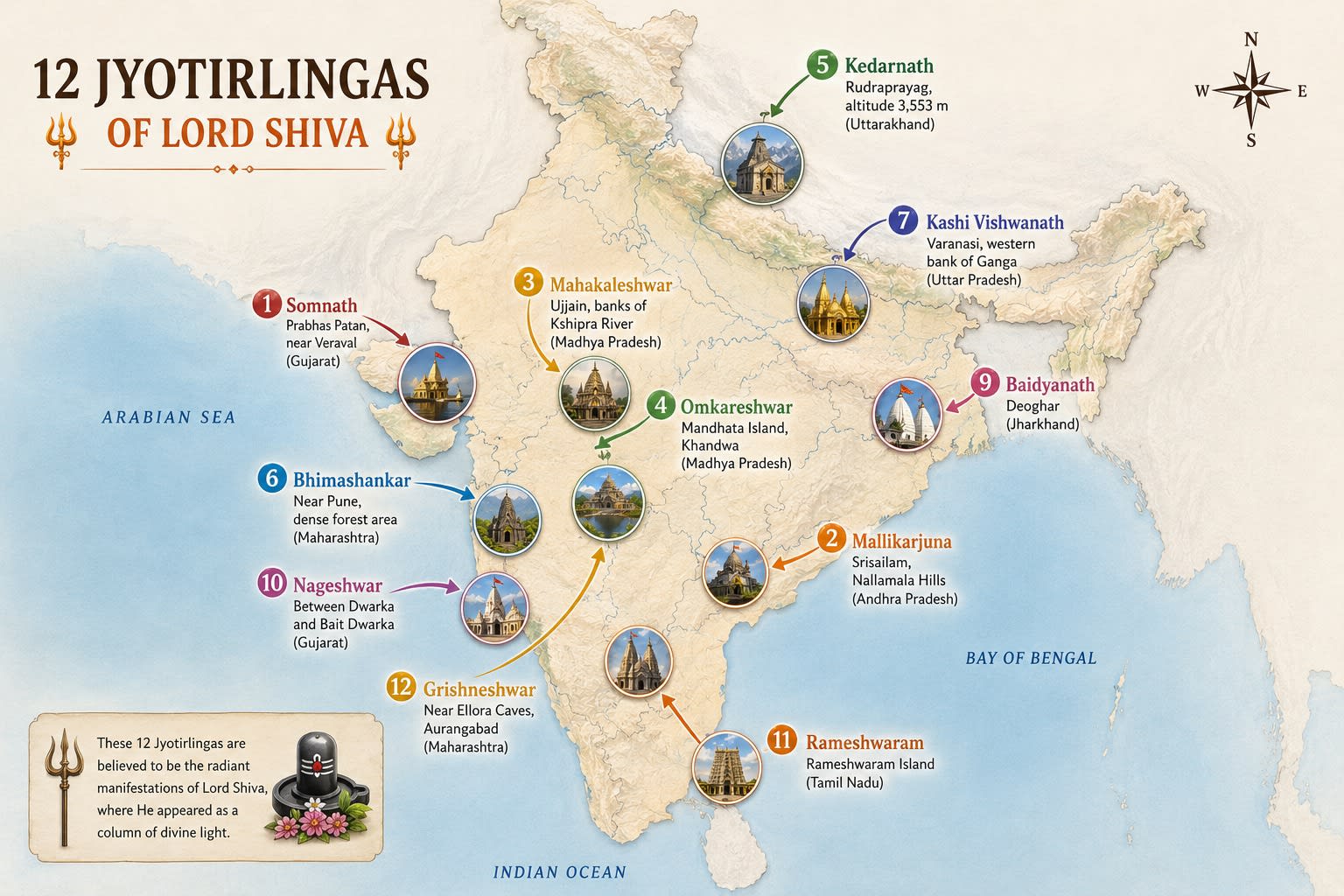
| No. | Jyotirlinga | State | Exact Location |
|---|---|---|---|
| 1 | Somnath | Gujarat | Prabhas Patan, near Veraval |
| 2 | Mallikarjuna | Andhra Pradesh | Srisailam, Nallamala Hills |
| 3 | Mahakaleshwar | Madhya Pradesh | Ujjain, on the Kshipra River |
| 4 | Omkareshwar | Madhya Pradesh | Mandhata Island, Narmada River |
| 5 | Kedarnath | Uttarakhand | Garhwal Himalayas |
| 6 | Bhimashankar | Maharashtra | Sahyadri Hills, near Pune |
| 7 | Kashi Vishwanath | Uttar Pradesh | Varanasi, on the Ganga |
| 8 | Trimbakeshwar | Maharashtra | Nashik, source of the Godavari |
| 9 | Vaidyanath | Jharkhand | Deoghar (Baba Baidyanath Dham) |
| 10 | Nageshwar | Gujarat | Near Dwarka |
| 11 | Rameshwaram | Tamil Nadu | Rameswaram island |
| 12 | Grishneshwar | Maharashtra | Verul, near Ellora Caves |
You can also browse all Jyotirlinga temples on DevMarg in one place, with temple profiles, timings, and darshan information for each shrine.
12 Jyotirlinga Darshan Guide: Location, Significance, Timing, and How to Reach
1. Somnath Jyotirlinga — Gujarat
Significance: Somnath is regarded as the first among the twelve Jyotirlingas. The present temple stands on the Arabian Sea coast at Prabhas Patan and has been rebuilt several times throughout history, which is why it is often described as a symbol of faith surviving destruction.
Darshan timing: The temple opens early in the morning and stays open through the day, with aarti performed three times daily. The evening aarti draws large crowds, especially around sunset when the sea and temple lights create a memorable view.
Best time to visit: October to March offers pleasant coastal weather. Summers from April to June get hot and humid, so plan an early morning or evening visit if you travel then.
How to reach: The nearest airport is Diu, about 60 km away, while Rajkot and Ahmedabad have larger airports. Veraval is the closest railway station, roughly 7 km from the temple.
Explore the full temple profile, timings, and darshan details on DevMarg: View Somnath Jyotirlinga on DevMarg
2. Mallikarjuna Jyotirlinga — Andhra Pradesh
Significance: Located in Srisailam on the Nallamala hills, this temple is unique because it is also counted among the 18 Shakti Peethas, making it sacred to both Shiva and Devi worshippers.
Darshan timing: Darshan begins early in the morning and continues till late evening, with a break for temple rituals in the afternoon. Special abhishekam services can be booked in advance during non-peak days.
Best time to visit: October to February is ideal, as the hill terrain stays cool and comfortable. The Maha Shivaratri Brahmotsavam in this period also draws large numbers of devotees.
How to reach: Srisailam is well connected by road from Hyderabad, about 210 km away. The nearest railway station is Markapur Road, followed by a road journey through forest terrain.
Explore the full temple profile, timings, and darshan details on DevMarg: View Mallikarjuna Jyotirlinga on DevMarg
3. Mahakaleshwar Jyotirlinga — Madhya Pradesh
Significance: Situated in Ujjain on the banks of the Kshipra River, Mahakaleshwar is the only Jyotirlinga facing south and is worshipped as Dakshinamurti. Ujjain itself is one of the seven Sapta Puri cities considered holy for attaining moksha.
Darshan timing: The temple is famous for its pre-dawn Bhasma Aarti, performed before sunrise using sacred ash. This ritual requires advance online booking as spots fill quickly, particularly during Shravan and Mahashivratri.
Best time to visit: October to March keeps Ujjain cool and pleasant for the pre-dawn Bhasma Aarti. The Shravan month and Mahashivratri bring the heaviest crowds of the year.
How to reach: Ujjain has its own railway station and is about 55 km from Indore, which has the nearest major airport.
Explore the full temple profile, timings, and darshan details on DevMarg: View Mahakaleshwar Jyotirlinga on DevMarg
4. Omkareshwar Jyotirlinga — Madhya Pradesh
Significance: This shrine sits on Mandhata Island in the Narmada River, an island whose shape is said to resemble the sacred Om symbol. Two temples exist here, Omkareshwar and Amareshwar, and both are counted together as one Jyotirlinga by tradition.
Darshan timing: Darshan hours run through the day with a midday closure for rituals. The evening Shri Omkar Mahadev Shayan aarti is a peaceful way to end a day of darshan here.
Best time to visit: October to March is best, since the riverside island stays cool and the water levels are pleasant for the ritual dip before darshan.
How to reach: Omkareshwar is about 77 km from Indore, which has the nearest airport and railway junction, with taxis and buses running regularly on this route.
Explore the full temple profile, timings, and darshan details on DevMarg: View Omkareshwar Jyotirlinga on DevMarg
5. Kedarnath Jyotirlinga — Uttarakhand
Significance: Set in the Garhwal Himalayas at an altitude of over 3,500 metres, Kedarnath is part of the Chota Char Dham circuit and is one of the most physically demanding Jyotirlingas to reach, which adds to its spiritual weight for pilgrims.
Darshan timing: The temple remains open only for about six months each year, typically from late April or early May until Diwali, as the region is snowbound the rest of the year. Darshan hours are from early morning to evening within this open season.
Best time to visit: May, June, September and October offer the clearest weather within the open season. July and August bring heavy monsoon rain and higher landslide risk on the trek route.
How to reach: Pilgrims travel to Gaurikund by road and then trek roughly 16 to 18 km, or take a helicopter service from Phata, Guptkashi or Sersi during the season.
Explore the full temple profile, timings, and darshan details on DevMarg: View Kedarnath Jyotirlinga on DevMarg
6. Bhimashankar Jyotirlinga — Maharashtra
Significance: Located in the Sahyadri hills within a wildlife sanctuary near Pune, Bhimashankar is associated with the legend of Shiva defeating the demon Tripurasura, and the temple is surrounded by dense forest that adds to its serene atmosphere.
Darshan timing: The temple is open throughout the day with morning and evening aarti. Since it lies within a protected forest area, visiting hours are generally kept within daylight for safety.
Best time to visit: October to February suits most travellers, though the monsoon months of July to September turn the forest lush green and are popular with nature lovers who don't mind occasional rain.
How to reach: Bhimashankar is about 110 km from Pune, connected by hill roads, and is a popular day trip combined with a nature visit to the sanctuary.
Explore the full temple profile, timings, and darshan details on DevMarg: View Bhimashankar Jyotirlinga on DevMarg
7. Kashi Vishwanath Jyotirlinga — Uttar Pradesh
Significance: Located in Varanasi on the banks of the Ganga, Kashi Vishwanath is considered one of the most important pilgrimage sites in Hinduism, and Varanasi itself is regarded as one of the oldest continuously inhabited cities in the world.
Darshan timing: The temple opens before dawn for Mangala Aarti and remains active through the day with multiple aarti sessions, ending with the Shayan Aarti at night. Online passes for special darshan and aarti are available and recommended during peak season.
Best time to visit: October to March offers the most comfortable weather for exploring the ghats along with the temple. The Dev Deepavali festival in this window is also worth planning around.
How to reach: Varanasi has its own airport and is a major railway junction, making it one of the easiest Jyotirlingas to reach by any mode of transport.
Explore the full temple profile, timings, and darshan details on DevMarg: View Kashi Vishwanath Jyotirlinga on DevMarg
8. Trimbakeshwar Jyotirlinga — Maharashtra
Significance: Near Nashik, Trimbakeshwar marks the origin of the Godavari River and is known for its three faces representing Brahma, Vishnu and Shiva within the linga. The temple is also associated with important rituals such as Narayan Nagbali and Kalsarpa Shanti.
Darshan timing: Darshan is available throughout the day, though certain rituals and the inner sanctum have specific timing windows, so checking with the temple trust in advance is useful.
Best time to visit: October to February is most comfortable. Monsoon months bring the Godavari to full flow, which some devotees prefer for its scenic and spiritual value despite the rain.
How to reach: Trimbakeshwar is about 30 km from Nashik city, which has good rail, road, and air connectivity from Mumbai and Pune.
Explore the full temple profile, timings, and darshan details on DevMarg: View Trimbakeshwar Jyotirlinga on DevMarg
9. Vaidyanath Jyotirlinga — Jharkhand
Significance: Also known as Baba Baidyanath Dham, this temple in Deoghar is where devotees traditionally carry holy Ganga water from Sultanganj on foot during the Shravan month, a walk known as the Kanwar Yatra.
Darshan timing: The temple opens early in the morning and stays active through the day, with the Shravan month seeing the heaviest footfall of the year across all Jyotirlingas.
Best time to visit: October to March is calmer and easier for darshan. If you want to join the Kanwar Yatra tradition, plan specifically for the Shravan month despite the larger crowds.
How to reach: Deoghar has its own airport and railway station, with good connectivity from Patna, Ranchi, and Kolkata.
Explore the full temple profile, timings, and darshan details on DevMarg: View Vaidyanath Jyotirlinga on DevMarg
10. Nageshwar Jyotirlinga — Gujarat
Significance: Near Dwarka, Nageshwar is associated with protection from poison and negativity, and its name translates to lord of serpents. A striking, tall statue of Lord Shiva stands in the temple complex facing the Arabian Sea.
Darshan timing: Darshan runs through the day, and the temple is easily combined with a visit to the Dwarkadhish Temple in the same trip.
Best time to visit: October to March offers the most pleasant coastal weather, similar to nearby Somnath, and pairs well with a combined Dwarka and Somnath itinerary.
How to reach: Nageshwar is about 17 km from Dwarka, which has a railway station and is well connected to Jamnagar and Rajkot by road.
Explore the full temple profile, timings, and darshan details on DevMarg: View Nageshwar Jyotirlinga on DevMarg
11. Rameshwaram Jyotirlinga — Tamil Nadu
Significance: Located on Rameswaram Island, the Ramanathaswamy Temple is linked to the Ramayana, as it is believed that Lord Rama worshipped Shiva here after his victory over Lanka. The temple is known for its long pillared corridors and 22 sacred wells used for ritual baths.
Darshan timing: The temple opens before dawn and closes late at night, with a break in the afternoon. Ritual baths at the wells are usually completed before the main darshan.
Best time to visit: October to April is generally comfortable, since the island stays warm throughout the year and the monsoon months bring higher humidity and rough sea conditions.
How to reach: Rameswaram has its own railway station connected to Madurai and Chennai, and Madurai airport is the nearest major airport, about 170 km away.
Explore the full temple profile, timings, and darshan details on DevMarg: View Rameshwaram Jyotirlinga on DevMarg
12. Grishneshwar Jyotirlinga — Maharashtra
Significance: The last of the twelve Jyotirlingas, Grishneshwar, stands in the village of Verul near the Ellora Caves. The current structure was rebuilt in the eighteenth century under the patronage of Ahilyabai Holkar and is known for its detailed stone carvings.
Darshan timing: Darshan hours run through the day, and most pilgrims combine their visit with the nearby Ellora Caves, a UNESCO World Heritage Site.
Best time to visit: October to March is ideal, giving comfortable weather for both the temple visit and a same-day trip to the Ellora Caves nearby.
How to reach: Grishneshwar is about 30 km from Aurangabad, which has an airport and railway station with regular connections to Mumbai and Pune.
Explore the full temple profile, timings, and darshan details on DevMarg: View Grishneshwar Jyotirlinga on DevMarg
Best Time to Visit the 12 Jyotirlingas
October to March works well for most of the twelve temples, since the weather across Gujarat, Madhya Pradesh, Maharashtra, Tamil Nadu, Andhra Pradesh, Uttar Pradesh, and Jharkhand stays pleasant during these months.
Kedarnath is the exception, as it only opens for about six months each year, usually from late April or early May until around Diwali. If Kedarnath is part of your plan, build your entire yatra route around its seasonal opening dates.
The Shravan month is spiritually significant and sees the highest footfall at nearly every Jyotirlinga, especially Kashi Vishwanath and Vaidyanath Dham. If you prefer a quieter darshan, avoid Shravan, Mahashivratri and other major Shiva-related festival dates.
Read our detailed Maha Shivratri guide to plan your yatra around this significant date, and check DevMarg's panchang reading guide to pick an auspicious muhurat for your journey.
Darshan Rules and What to Keep in Mind
- Most temples ask visitors to dress modestly, avoiding shorts, sleeveless tops and other casual western wear.
- Phones and cameras are restricted inside the sanctum at several temples, including Somnath and Nageshwar, so check the local rules before entry.
- Special rituals like the Bhasma Aarti at Mahakaleshwar require advance online booking, sometimes weeks ahead during peak season.
- Keep a valid photo ID handy, as some temples ask for identification during special darshan or VIP entry.
- Carry comfortable footwear, as shoes are not allowed inside the temple premises and some walking is expected at every site.
How to Plan Your Own 12 Jyotirlinga Yatra
Most pilgrims group the twelve temples into regional clusters rather than travelling in numerical order, since this saves significant time and cost.
- West India cluster: Somnath and Nageshwar in Gujarat can be covered together in 3 to 4 days.
- Central India cluster: Mahakaleshwar and Omkareshwar in Madhya Pradesh, both near Indore, can be covered in 3 to 4 days.
- Maharashtra cluster: Bhimashankar, Trimbakeshwar and Grishneshwar can be covered in 4 to 5 days with Pune, Nashik and Aurangabad as base points.
- North and East cluster: Kashi Vishwanath in Varanasi and Vaidyanath in Deoghar can be combined in 3 to 4 days.
- Himalayan leg: Kedarnath needs its own dedicated 3- to 4-day trip due to the trek or helicopter journey involved.
- South India cluster: Mallikarjuna in Andhra Pradesh and Rameshwaram in Tamil Nadu are best planned as a separate 4- to 5-day leg.
Breaking the full circuit into these shorter regional trips over several months is often more practical for working professionals and families than attempting all twelve shrines in one long journey.
Conclusion
The 12 Jyotirlingas represent one of the most profound pilgrimage traditions in Sanatan Dharma, connecting devotees to Lord Shiva across the length and breadth of Bharat. Whether you plan to visit all twelve over several trips or start with the one closest to home, each darshan is a step in a deeply personal spiritual journey. Explore more temple guides, panchang tools, and puja booking options on DevMarg to plan your journey with confidence.
Frequently Asked Questions
What is a Jyotirlinga?
A Jyotirlinga is a shrine where Lord Shiva is worshipped in the form of a jyotirlinga, meaning a pillar of light. It represents Shiva's infinite and formless nature, and there are twelve such shrines considered most sacred across India.
How many Jyotirlingas are there in India?
There are twelve principal Jyotirlingas recognised across India, spread over nine states, though some scriptures mention that many more shrines were once associated with this tradition.
Which is the first Jyotirlinga?
Somnath in Gujarat is traditionally considered the first Jyotirlinga, though the order can vary slightly across different regional traditions and texts.
How many days does it take to visit all 12 Jyotirlingas?
A complete circuit usually takes between 15 and 24 days, depending on the travel route, mode of transport, and how much time is spent at each temple. Many devotees split the yatra into two or three shorter trips instead of one long journey.
Which state has the most Jyotirlingas?
Maharashtra has four Jyotirlingas, more than any other state. These are Bhimashankar, Trimbakeshwar, and Grishneshwar, along with Aundha Nagnath, which some traditions count among the twelve.
Is Kedarnath open all year round?
No, Kedarnath is open only for about six months, generally from late April or early May until around Diwali, since heavy snowfall makes the region inaccessible during winter.
What is the best time to start a Jyotirlinga yatra?
The months from October to March are generally the most comfortable for most of the shrines, while the Himalayan temple of Kedarnath is only accessible between its seasonal opening and closing dates each year.
A note on timings and rituals: darshan timings, aarti schedules, and travel routes mentioned here can change with the season, local festivals, and temple trust decisions. Please confirm current timings with the respective temple management or official website before you travel.