
Vat Purnima 2026: Date, Rituals & Significance
Vat Purnima 2026 falls on Monday, June 29, 2026. On this full moon day of the Jyeshtha month, married women across India keep a day-long fast and worship the banyan tree, praying for the long life and good health of their husbands. The festival carries the timeless story of Savitri, a devoted wife who is believed to have brought her husband back from death through her love and unwavering faith.
If you are planning to observe this vrat for the first time, or simply want to understand it better, this guide walks you through everything: the correct date and timings, the shubh muhurat, the story behind it, the complete puja vidhi, the samagri you will need, fasting rules, how to break the fast, how different regions celebrate it, and answers to the questions most people ask.
When Is Vat Purnima in 2026? Date and Timings
Vat Purnima 2026 will be observed on Monday, June 29, 2026, the full moon day (Purnima Tithi) of the Jyeshtha month in the Hindu calendar.
Here are the key timings:
| Detail | Time |
|---|---|
| Vat Purnima Date | Monday, June 29, 2026 |
| Purnima Tithi Begins | June 29, 2026 at 3:07 AM |
| Purnima Tithi Ends | June 30, 2026 at 5:27 AM |
These timings follow standard panchang readings and can shift by a minute or two depending on your city, since sunrise and tithi calculations vary by location. In 2026, Hindu festival dates also fall later than usual because of an extra lunar month (Adhik Maas) in the calendar, so if you are comparing this year's date with last year's, the shift is expected.
Vat Purnima 2026 Shubh Muhurat
The most favourable time to perform the Vat Purnima puja is in the morning, roughly 6:30 AM to 12:30 PM on June 29, 2026. This window covers the auspicious morning hours when most families complete the banyan tree worship.
Many devotees avoid performing the puja between 12:30 PM and 2:30 PM, as this period is traditionally considered less suitable for the ritual. As muhurat timings shift slightly by city, it is wise to confirm the local muhurat for your town before you begin.
What Is Vat Purnima?
Vat Purnima is a fasting festival observed mainly by married Hindu women for the well-being, longevity, and prosperity of their husbands. The word "Vat" refers to the banyan tree, which sits at the heart of the rituals, and "Purnima" means the full moon day on which it is observed.
The festival is also known as Vat Savitri Vrat in many parts of India. The name changes from region to region, but the spirit stays the same: a wife's prayer for a long and happy married life, inspired by the devotion of Savitri.
On this day, women dress in fine traditional clothes, complete their shringar, and gather around a banyan tree to perform the rituals together. The tree is honoured with water, sindoor, and a sacred thread, and the legendary story of Savitri and Satyavan is read or recited.
The Story Behind Vat Purnima: Savitri and Satyavan
The heart of Vat Purnima is the story of Savitri and Satyavan, one of the most loved tales of devotion in Sanatan Dharma. This story appears in the Mahabharata, where the sage Markandeya narrates it to Yudhishthira during the Pandavas' time in the forest.
Savitri was the only daughter of King Ashwapati. Wise, beautiful, and strong-willed, she set out on her own to choose a husband. She chose Satyavan, a noble and gentle prince who was living in the forest with his blind, exiled parents.
When the sage Narada learned of her choice, he gave a heavy warning. Satyavan, he said, was destined to die exactly one year from that day. Savitri's family urged her to choose someone else. But she refused. Her decision was made, and she would not change it.
Savitri married Satyavan and lived humbly in the forest, serving her in-laws with care. As the fateful day drew near, she began a strict three-day fast. On the day Narada had named, she insisted on following Satyavan into the forest as he went to cut wood.
While working, Satyavan suddenly felt weak and lay his head on Savitri's lap. At that moment, Yama, the lord of death, appeared to take his soul. Savitri followed Yama as he carried Satyavan's life away.
Moved by her devotion, Yama offered her boons, anything except the life of her husband. Savitri asked wisely. First, she asked for her father-in-law's eyesight and kingdom to be restored. Then she asked for sons for her own father. Finally, she asked for sons of her own.
Yama granted each wish. But here lay Savitri's quiet wisdom: she could not bear sons without her husband. Bound by his own word, Yama had no choice but to return Satyavan's life. Satyavan revived as if waking from sleep, and the couple returned home to find every blessing fulfilled.
This is the story women remember on Vat Purnima, a tale of love, patience, intelligence, and faith that even death could not defeat.
Why the Banyan Tree Is Worshipped
The banyan tree, or Vat Vriksha, is central to this festival, and the reason runs deep in tradition. The banyan is known for its long life and its ever-spreading roots, which is why it has long stood as a symbol of immortality, strength, and continuity.
In many traditions, the tree is believed to hold the presence of the Trimurti. Its roots are linked with Brahma, its trunk with Vishnu, and its upper branches with Shiva. Honouring the tree is therefore seen as honouring the divine forces that create, protect, and sustain life.
There is also a tender connection to the Savitri story. It is believed that Satyavan regained his life beneath a banyan tree. By worshipping the same kind of tree, women seek the same blessing of a long life for their husbands. Tying a thread around its wide trunk has become a beautiful way of praying that the bond of marriage stays unbroken, year after year.
The Significance of Vat Purnima Vrat
Vat Purnima is far more than a ritual on a calendar. For the women who observe it, it is an expression of love, commitment, and faith in the strength of marriage.
The festival celebrates a few enduring values:
- Devotion and loyalty: Savitri's story stands for steady, selfless love that does not waver, even in the face of loss.
- Inner strength: The vrat honours the quiet courage of women who hold their families together through faith and patience.
- Marital harmony: Women pray not only for their husband's long life, but also for peace, understanding, and happiness in the home.
While the vrat is mainly kept by married women, in some regions unmarried girls also observe it, praying for a good life partner in the future. The glory of this vrat finds mention in several Hindu texts, including the Skanda Purana and the Bhavishyottara Purana, which is why it is followed with such deep reverence across generations.
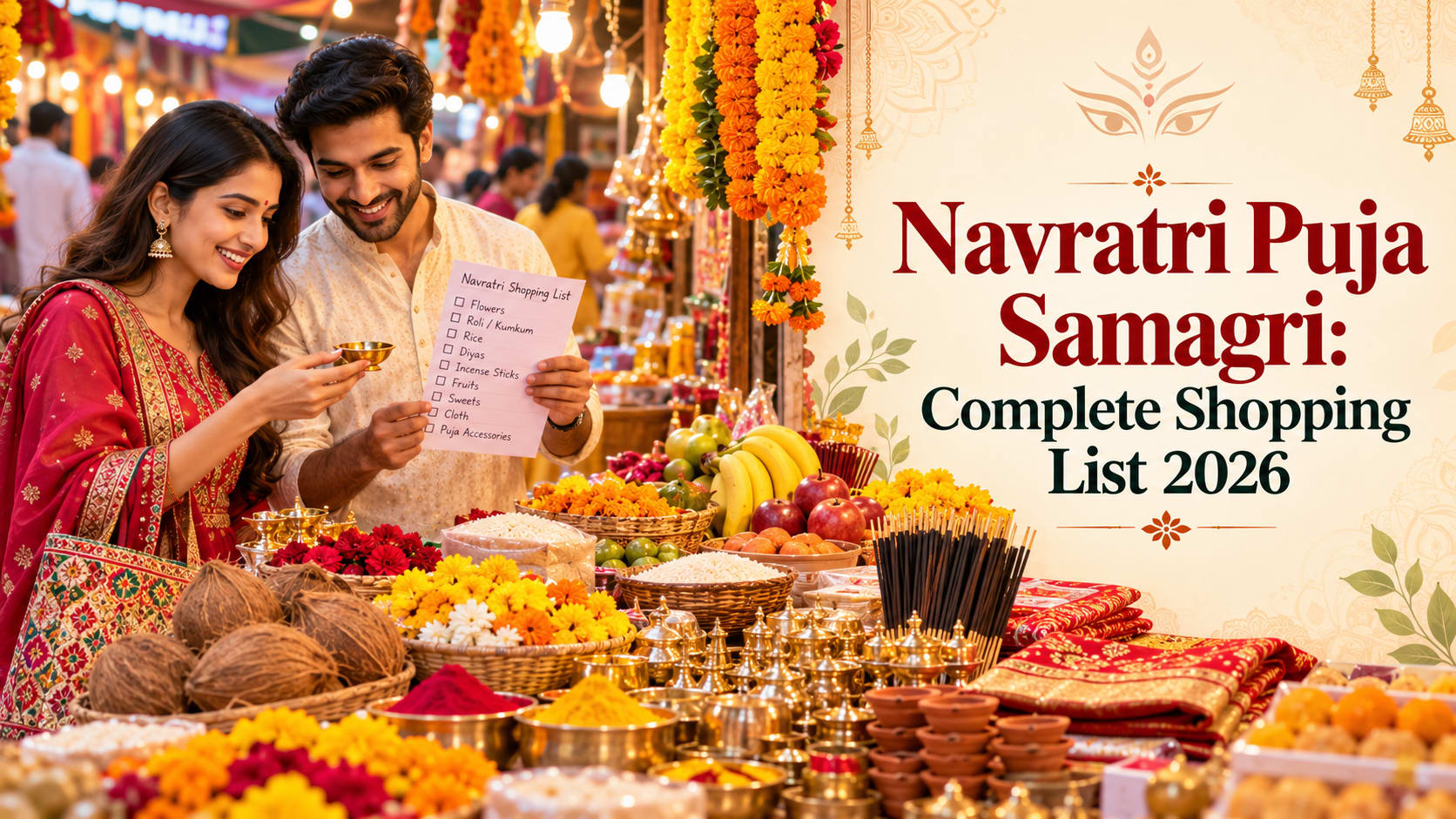
Vat Purnima Puja Samagri (Items You Will Need)
Gathering your samagri a day in advance makes the puja smooth and unhurried. Here is a simple checklist of items commonly used:
- A banyan tree (or a banyan branch, if a full tree is not nearby)
- Raw cotton thread (kaccha sutra) for tying around the tree
- A bamboo basket or winnowing fan (soop), used in many regional traditions
- Water in a kalash (small pot) for offering
- Roli or kumkum, haldi (turmeric), and akshat (unbroken rice)
- Sindoor and items of shringar
- Flowers and a garland
- Seasonal fruits, especially mango, and bananas
- Soaked black gram (chana), often used for offering and for breaking the fast
- A diya (lamp), incense sticks, and camphor
- Bhog or sweets to offer
- A hand fan (pankha)
- The Vat Savitri Vrat Katha book or printout
If you cannot find every item, do not worry. Sincere devotion matters more than a perfect list. Offer what you have with a clean heart.
Vat Purnima Puja Vidhi: Step-by-Step Guide
The puja is simple to follow once you know the order. Here is a clear, step-by-step method:
- Wake up early and take a bath before sunrise. Wear clean, traditional clothes, often a saree, and complete your shringar.
- Take the sankalp, a quiet vow to observe the fast for your husband's well-being and long life.
- Prepare your puja thali with all the samagri, including the kaccha sutra, kumkum, akshat, flowers, fruits, and a diya.
- Visit the banyan tree. Clean the area around it and sprinkle water on the ground.
- Offer water to the tree's roots first, followed by kumkum, haldi, akshat, and flowers.
- Light the diya and incense beneath the tree and offer the bhog and fruits.
- Tie the sacred thread. Wrap the raw cotton thread around the trunk while walking around the tree. The circling is usually done seven times, though some regions follow three or five rounds, with a prayer for your husband's long life at each round.
- Read or listen to the Vat Savitri Vrat Katha, remembering the story of Savitri and Satyavan.
- Pray to Savitri and Satyavan for marital happiness and family well-being. In some homes, elders are touched on the feet to seek their blessings.
- Break the fast after completing the rituals, in keeping with your family's custom.
Families follow small variations in these steps depending on region and tradition. If your home has its own way of doing things, follow that with confidence: the intention behind the puja is what gives it meaning.
Fasting Rules for Vat Purnima
The fast on Vat Purnima is usually kept for a full day, from sunrise until the puja is complete. There are two common ways to observe it:
- Nirjala vrat: A strict fast without food or water. This is the most traditional form and is kept by many women.
- Phalahar vrat: A lighter fast where fruits, milk, and water are allowed. This is a gentler option for those who cannot manage a waterless fast.
Tradition is also kind to those who genuinely cannot fast. Pregnant women, new mothers, elderly women, those who are unwell, and working women with long days are not bound to keep a strict fast. They can perform the puja with full devotion and observe a partial fast, or none at all, without any guilt. The blessing comes from sincere faith, not from hardship.
The fast is generally broken after the puja, and many women begin with soaked black gram or a little fruit before a proper meal. Listen to your body, especially in the June heat, and keep yourself hydrated if a nirjala fast feels too demanding.
How to Break the Vat Purnima Fast (Paran)
The Vat Purnima fast is broken after the morning puja and the Vrat Katha are complete, within the auspicious time. Most women begin the paran by eating the soaked black gram (chana) that was offered during the puja, often along with a piece of mango. This gentle start settles the stomach before a full meal.
There is no strict clock time for breaking this fast the way there is for some other vrats. Once the worship and the katha are done, you may break the fast respectfully, ideally before the inauspicious afternoon window. In many homes, women first offer the prasad to their husband or take his blessings, and only then eat themselves.
A lovely custom in several regions is the giving of vaayan (also called baya). The woman places fruits, a little money, sweets, and sometimes a piece of clothing in a basket and offers it to her mother-in-law or an elderly married woman, touching their feet to seek blessings for a long and happy married life. This act of giving is considered an important part of completing the vrat.
A few simple reminders for the paran:
- Break the fast slowly, starting with soaked chana, fruit, or water, especially after a nirjala fast.
- Avoid heavy or fried food immediately. Let your body ease back gently.
- If you observed a nirjala fast in the June heat, rehydrate with care.
- Follow your family's tradition for the exact order, as customs differ from home to home.
Regional Celebrations of Vat Purnima
While the heart of the festival stays the same across India, the way it is observed, and even when, changes from region to region.
Maharashtra, Gujarat, and Goa are where Vat Purnima is celebrated with the most enthusiasm. Here, married women observe the vrat on the Jyeshtha Purnima, the full moon day. Dressed in their finest, often in green or red, they gather in groups around banyan trees, tie threads, and share fruits and sweets, turning the day into a warm community gathering.
North Indian states such as Uttar Pradesh, Bihar, Madhya Pradesh, and Punjab follow a slightly different calendar. There, the same vrat is observed as Vat Savitri Vrat on the Jyeshtha Amavasya (the new moon day) instead of the full moon. In 2026, this Amavasya-based observance fell about two weeks earlier, on May 16, 2026. The story and rituals are the same; only the date differs because of the calendar tradition followed.
In parts of South India, the devotion of Savitri and Satyavan is honoured too, though customs and timing vary. In Tamil Nadu, for example, the Savitri-Satyavan legend is connected with a separate observance called Karadaiyan Nonbu, which is kept at a different time of year. This is a good reminder that Hindu traditions are wonderfully diverse, and the same story can take different forms across the country.
So if you notice that women in your family observe it on a different day than your friends elsewhere, both are right. The difference simply reflects the regional calendar each community follows.
Practical Tips for Observing Vat Purnima
A little planning makes the day calmer and more meaningful. Keep these simple tips in mind:
- Prepare the night before. Collect your samagri and keep your clothes ready so the morning is unhurried.
- Find your tree in advance. Locate a nearby banyan tree, or arrange a branch, especially if you live in a city where trees are harder to find.
- Go early. Mornings are cooler and less crowded, and the puja muhurat is usually best earlier in the day.
- Do it together. Observing the vrat with other women in the family or neighbourhood makes it more joyful and easier to follow.
- Stay safe in the heat. June can be very hot. If a nirjala fast feels risky for your health, choose a phalahar fast instead. Your well-being matters.
For those living abroad: If you cannot find a banyan tree, you can keep the fast, set up a small puja at home, read the Vrat Katha, and offer prayers with full devotion. Many families also arrange a puja with a pandit back home so the family stays connected to the tradition.
Frequently Asked Questions
When is Vat Purnima in 2026?
Vat Purnima 2026 is on Monday, June 29, 2026. The Purnima Tithi begins at 3:07 AM on June 29 and ends at 5:27 AM on June 30.
What is the shubh muhurat for Vat Purnima 2026?
The puja is best performed in the morning, roughly between 6:30 AM and 12:30 PM on June 29. Many families avoid the 12:30 PM to 2:30 PM window, as it is traditionally considered less suitable. Timings can vary slightly by city.
What is the difference between Vat Purnima and Vat Savitri Vrat?
They are essentially the same vrat with the same story and rituals. The difference is in the date. Maharashtra, Gujarat, and Goa observe it on the Jyeshtha Purnima (full moon), while many North Indian states observe Vat Savitri Vrat on the Jyeshtha Amavasya (new moon), about fifteen days earlier.
Who observes the Vat Purnima fast?
It is mainly observed by married women for the long life and well-being of their husbands. In some regions, unmarried women also keep it while praying for a good life partner.
Can pregnant or unwell women keep the fast?
Yes, but they are not required to keep a strict fast. They can observe a light fast or simply perform the puja with devotion. Tradition places no burden on those who cannot fast for health reasons.
Why is the banyan tree worshipped on Vat Purnima?
The banyan tree symbolises long life and immortality. It is also linked with the Trimurti, Brahma, Vishnu, and Shiva, and is connected to the place where Satyavan is believed to have regained his life.
Why is the thread tied around the tree?
The rounds reflect the bond of marriage and a prayer for it to last across lifetimes. With each round, women pray for their husband's long life and a happy married life. The number of rounds is usually seven, though it varies by region.
What should I eat to break the Vat Purnima fast?
The fast is usually broken after the puja, often beginning with soaked black gram (chana) or fruit, followed by a proper meal as per family custom.
How do you break the Vat Purnima fast (paran vidhi)?
The fast is broken after the morning puja and Vrat Katha are complete, within the auspicious time. Women usually start with soaked black gram and mango, offer prasad to their husband or take elders' blessings, and in many regions give vaayan (a basket of fruits and gifts) to the mother-in-law before eating a full meal.
Conclusion
Vat Purnima 2026, on Monday, June 29, is a day that brings married women together in prayer, faith, and quiet strength. Behind the fasting and the rituals lies the beautiful story of Savitri, whose devotion is remembered as a symbol of love that even death could not break.
Whether you keep a strict fast or a gentle one, whether you tie a thread around a grand old banyan or simply pray at home, what matters most is the sincerity in your heart. The festival is a gentle reminder that strong relationships are built on patience, trust, and unwavering support, values as meaningful today as they were in Savitri's time.
May your prayers this Vat Purnima be answered, and may your home stay blessed with health, harmony, and happiness. For more festival dates and guides, explore the full DevMarg festivals hub.