

Shradh Samagri List: Items for Home Puja & Tarpan
Pitru Paksha falls in the Ashwin month. For sixteen days, many Hindu families set aside a morning to remember their ancestors. If you are doing Shradh at home for the first time, the hardest part is often the simplest: knowing exactly what to buy and keep ready before you sit down.
This guide gives you the full shradh samagri list for home puja and tarpan, grouped so you can shop in one trip. It explains what each item is for, which ones you must not skip, and how to lay them out on the day. The dates and times below are for New Delhi; adjust the sunrise-based times for your own city.
Key facts
- Occasion
- Pitru Paksha Shradh (Ashwin Krishna Paksha)
- Best time of day
- Kutup and Rohina muhurat, roughly late morning
- Direction for tarpan
- Facing south
- Food offering
- Vegetarian, satvik, no onion or garlic
What samagri is needed for Shradh and Tarpan at home
For Shradh and tarpan at home, you need kush grass, black sesame seeds (kala til), raw barley (jau), raw cow milk, Ganga jal, a copper or brass vessel, a wooden seat or asan, cooked rice balls (pind) made with ghee and barley flour, and separate food portions for a crow, a cow,w and a dog. These cover the water offering, the pind da,an and the feeding of beings.
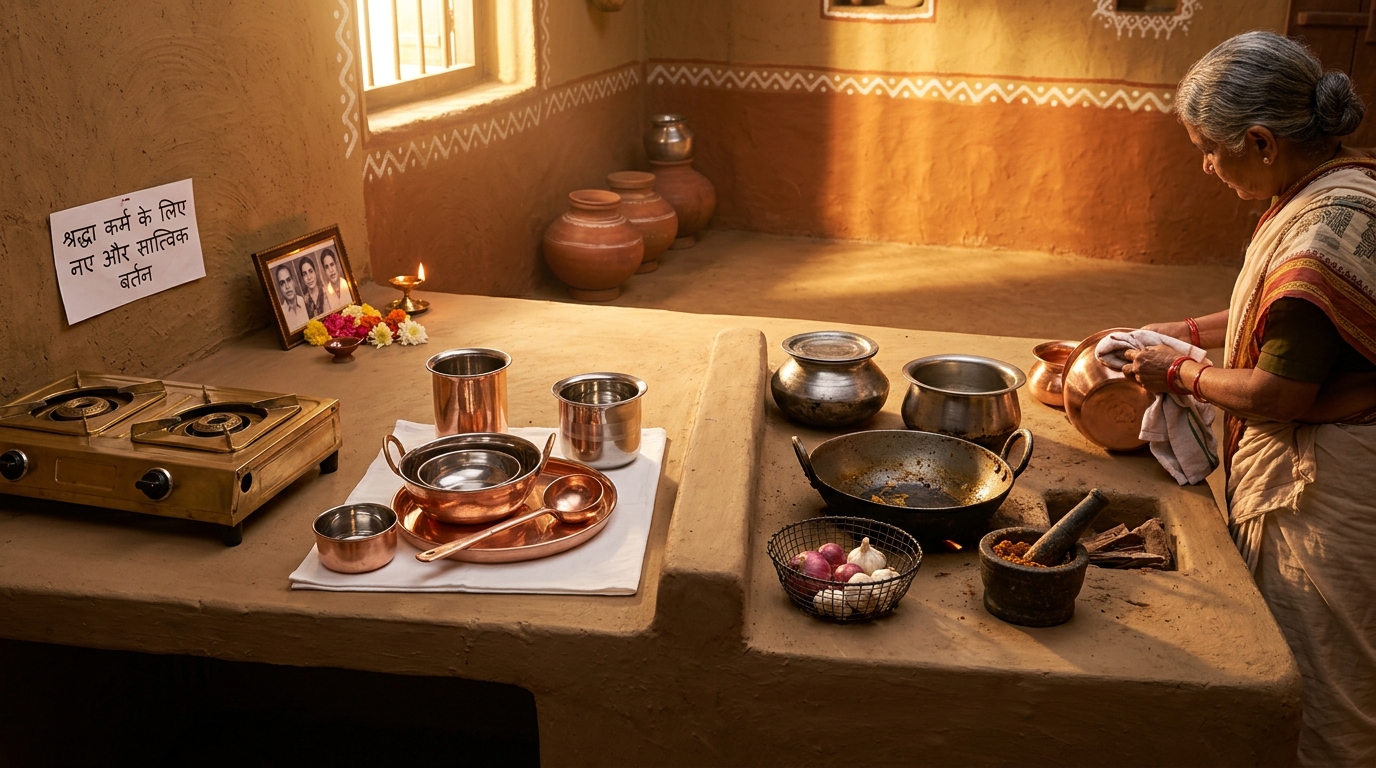
Everything you use should be clean and, ideally, new or kept only for this purpose. The offering is vegetarian throughout. You do not need a long list of flowers or decorative items. Shradh is plain by design, and the focus stays on tarpan and food rather than show.
The complete shradh samagri list
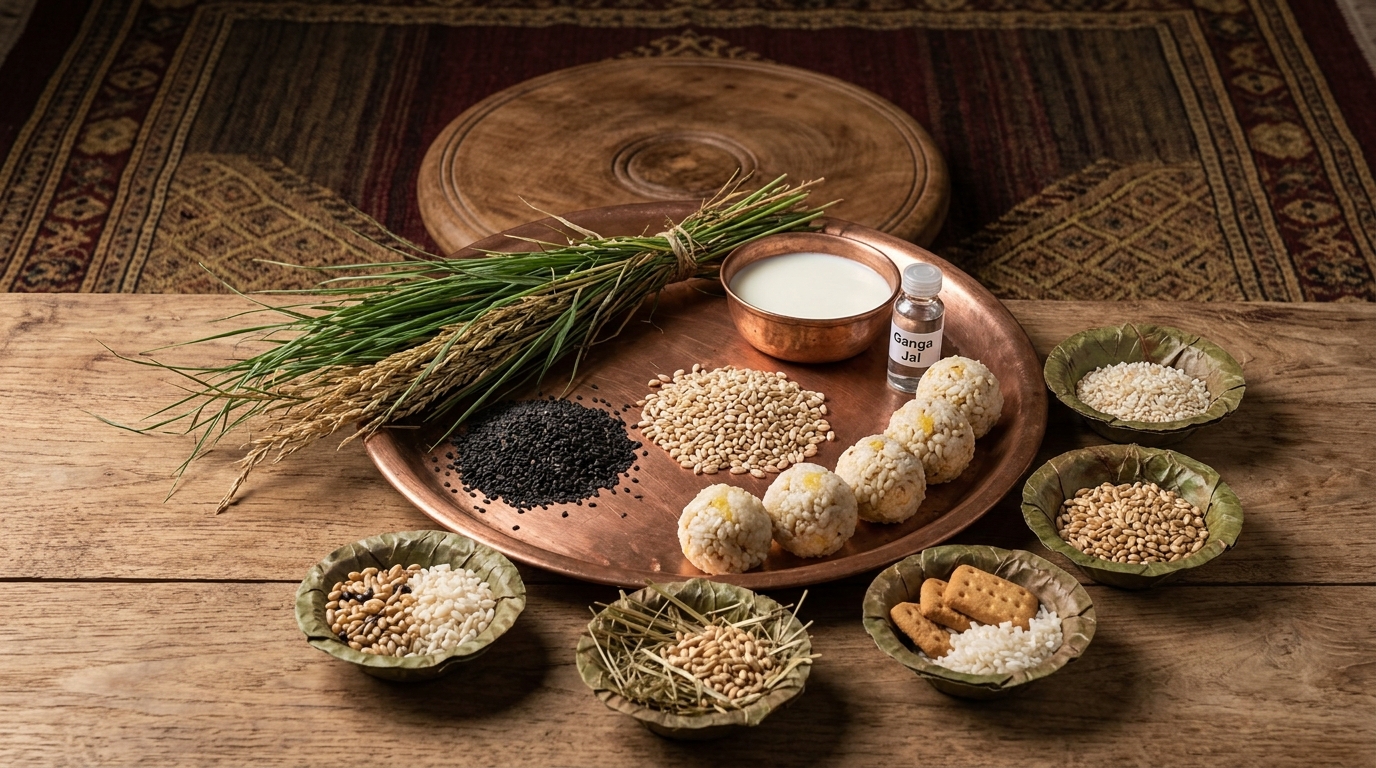
The list below splits into four groups: tarpan items, pind daan items, the food you cook, and the small pooja essentials. Buy the perishables, like milk and cooked food, on the morning itself. Dry items like til and barley can be kept ready a day ahead.
| Group | Items |
|---|---|
| Tarpan (water offering) | Kush grass, black sesame (kala til), raw barley, raw cow milk, Ganga jal, clean water, copper or brass lota, a plate or thali to pour over |
| Pind daan | Cooked rice, barley flour (jau ka atta), pure ghee, black sesame, a banana leaf or plate |
| Food to cook | Kheer (rice and milk), rice, dal or a simple sabzi, puri, something the departed liked, all without onion or garlic |
| Pooja essentials | Wooden asan, white or cream cloth, roli, akshat (unbroken rice), dhoop or agarbatti, a diya with ghee, a photo of the ancestor if you keep one |
Kush grass matters more than first-timers expect. It is a sacred darbha grass, and a ring of it (pavitri) is worn on the ring finger during tarpan. Most pandits insist on it, so arrange it early from a pooja store or a nearby temple.
16
days in Pitru Paksha, from Purnima to the Amavasya called Sarva Pitru Amavasya.
Why each item is used
Black sesame, or kala til, is offered in almost every step. It wards off negative energy and is considered dear to the ancestors. Tarpan water is poured with til held in the palm. Barley stands in for sesame in some family traditions, and both are often used together.
Kush grass purifies. Wearing the pavitri ring and placing kush on the ground marks the space and the hands as fit for the ritual. Raw cow milk and Ganga jal purify the water you offer, which is why a few drops of each go into the tarpan vessel.
The pind, a ball of cooked rice mixed with barley flour, ghee, and sesame, is the symbolic food given to the departed. Cow milk kheer is offered because it is considered a favourite of the pitr. The crow, cow and dog each receive a portion because, in tradition, the offering reaches the ancestors through them.
How to arrange tarpan at home
Tarpan is the act of offering water, mixed with sesame and kush, to your ancestors. You do it in the morning after a bath, wearing clean clothes, and facing south, the direction associated with the pitr.

Set your copper or brass lota with clean water. Add a few drops of raw milk and Ganga jal, and a pinch of black sesame. Wear the kush pavitri on your right ring finger. Hold the water and sesame in your cupped palms and let it flow out through the base of the fingers, the part of the hand used for pitr offerings, while reciting the names of your ancestors.
Tip: If you do not know the full sankalp or mantras, a short, sincere remembrance of your ancestors by name is accepted. You can keep a printed mantra sheet or a recording ready, and our mantras section can help you find the right words.
Pour the water towards the south over a plate or into a tulsi pot, not down a drain. Repeat the offering the number of times your family tradition follows, usually a set of three or more.
The food offering and feeding the crow, cow and dog
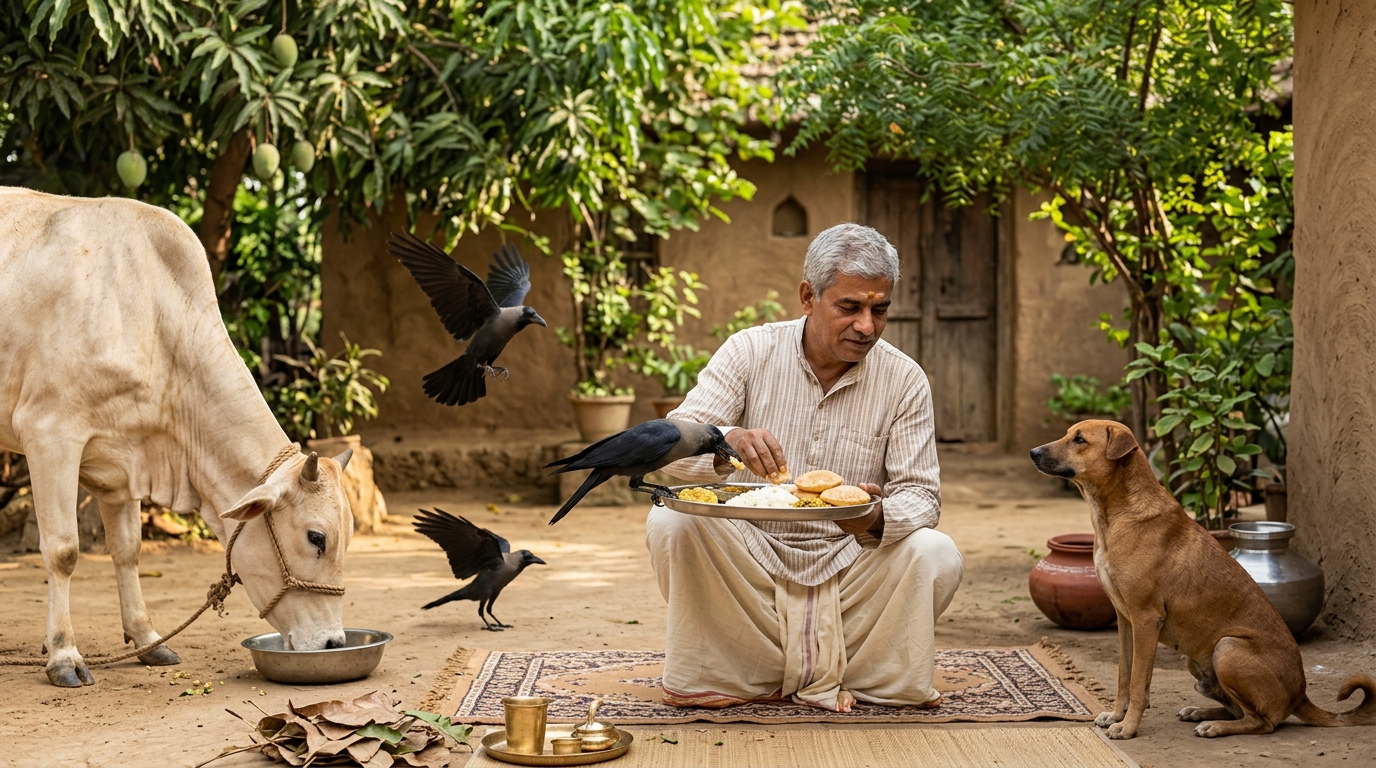
The food you cook for Shradh is a simple satvik meal. A portion of it is set aside before anyone eats. Cook without onion and garlic. Kheer, rice, a dal or sabzi, and puri form a common spread. Many families add the specific dish the departed person loved.
Before your family eats, separate out portions in this order by tradition:
- Gau gras, a share for the cow
- Kak bali, a share for the crow, often placed on a roof or wall
- Shwan bali, a share for the dog
- A share for a Brahmin or a needy person, or offered as daan
Say you are doing Shradh for your grandfather on the tithi of his passing. You cook kheer because he liked it, keep the three animal portions on a banana leaf outside by late morning, feed a Brahmin or donate the food, and only then does the household eat. If a crow comes to the food, it is taken as a sign the offering was accepted. If none comes, you simply leave it out and carry on without worry.
When to perform Shradh during Pitru Paksha
Shradh is performed on the tithi, the lunar date, on which the person passed away, during the Pitru Paksha fortnight. If you do not know the exact tithi, Sarva Pitru Amavasya, the last day, is used for all ancestors.
The ritual is done in the Kutup and Rohina muhurat, which fall in the late morning after the sun has risen well. This is roughly late morning to early afternoon for most of North India. Avoid the very early dawn and the evening for the main Shradh. You can check the tithi for your family's date on the calendar and look up auspicious timings in the muhurat section.
For the Amavasya date itself, which closes the fortnight, our Amavasya Upavas page lists the monthly dates and timings.
What to avoid and common first-timer mistakes
The most common mistake is treating Shradh like a festival with flowers, sweets bought from a shop, and bright decoration. It is a solemn remembrance, kept plain and clean.
A few things go wrong often:
- Using tamasik food. No onion, garlic, meat, or alcohol, and nothing bought ready-made from a non-veg kitchen.
- Skipping kush grass because it is hard to find. Arrange it a day ahead rather than doing without.
- Facing the wrong way. Tarpan is done facing south, not east as in regular pooja.
- Pouring the offering into a drain or sink. Use a plate, a tulsi pot, or clean earth.
- Cutting hair or nails and buying new things during the fortnight, which many families avoid.
Watch out: Do not use the kitchen vessels you cook daily meat or onion-garlic food in for the Shradh offering. Keep separate, clean utensils, washed and dedicated to the ritual, to maintain the satvik rule.
Women, elders,s and anyone unable to do the full ritual can offer water and food with the same sincerity. Many families have the eldest son or a close male relative lead, but a daughter or spouse performing tarpan is widely accepted.
A quick recap before you begin
Keep the shradh samagri list to its four groups: tarpan items (kush, kala til, barley, raw milk, Ganga jal, a copper lota), pind daan items (cooked rice, barley flour, ghee), the satvik food you cook, and the plain pooja essentials. Buy the dry items a day ahead and the perishables in the morning.
Perform tarpan after a bath, facing south, with the kush pavitri on your ring finger. Set aside food for the cow, crow, and dog before the household eats. Do it on your family's tithi, or on Sarva Pitru Amavasya if the date is unknown.
For dates throughout the year, see our festivals listings and the vrat and upavas calendar. May the offering reach your pitr and bring peace to your home.
Frequently asked questions
Can I perform Shradh and tarpan at home without a pandit?
Yes. You can perform Shradh and tarpan at home yourself. Keep the samagri ready, bathe and wear clean clothes, wear the kush pavitri, and pour water with sesame facing south while remembering your ancestors by name. A pandit helps with the full sankalp and mantras, but sincere practice with the right items is accepted when one is not available.
Where can I buy kush grass and black sesame for Shradh?
Kush grass, black sesame (kala til) and barley are sold at pooja samagri shops, near large temples, and at many general kirana stores during Pitru Paksha. Kush can be harder to find, so arrange it a day in advance. Some temples give small bundles of darbha grass free. Order online a few days ahead if local stock runs out during the fortnight.
What if a crow does not come to eat the food offering?
It is not a problem. A crow arriving is seen as a happy sign the offering was accepted, but its absence does not mean the Shradh failed. Leave the food out for a reasonable time, then offer it to a cow, a dog, a Brahmin or a needy person. The intention and the proper offering matter more than whether a bird appears.
Can a daughter or woman do tarpan if there is no son?
Yes. While many families traditionally have the eldest son lead, a daughter, wife or other close relative can perform tarpan and Shradh with full validity. The essential requirements are cleanliness, the correct samagri, facing south, and sincere remembrance of the ancestors. If you are unsure of your family custom, consult an elder or a pandit, but the ritual is not denied for lack of a son.
Do I need Ganga jal and raw cow milk, or can I use plain water?
Plain clean water works if you cannot get Ganga jal or raw cow milk. Both are added as purifiers and are preferred, so include them when available, even a few drops. If neither is at hand, use clean water with black sesame and kush grass, which are the items pandits treat as non-negotiable for tarpan.
On which day of Pitru Paksha should I do Shradh for my parent?
Perform Shradh on the tithi, the lunar date, on which your parent passed away, falling within the sixteen-day Pitru Paksha fortnight. If you do not know the exact tithi, use Sarva Pitru Amavasya, the final day, which covers all ancestors. Check the tithi on a reliable Hindu calendar for your city, since the date shifts each year.
Can I cook the Shradh food in my regular kitchen utensils?
Only if those utensils are clean and not used for onion, garlic or non-vegetarian food. Many families keep separate vessels for the Shradh offering to maintain the satvik rule. Wash everything well, cook without onion and garlic, and set aside the offering portions before the household eats from the same food.
Is it necessary to make pind for home Shradh, or is tarpan enough?
Tarpan alone, the water offering with sesame, is commonly done at home and is considered valid, especially when a full ritual is not possible. Pind daan, offering rice balls, is the more complete form and is often reserved for formal Shradh at sacred sites like Gaya. For a home ritual, tarpan plus feeding the cow, crow and dog is widely followed.
What direction should I face during tarpan and why?
Face south during tarpan. The south, or dakshin, is the direction associated with the ancestors and Yama in Hindu tradition, which is why pitr offerings differ from regular pooja done facing east or north. Pour the water offering towards the south over a plate, a tulsi pot or clean earth, never into a sink or drain.