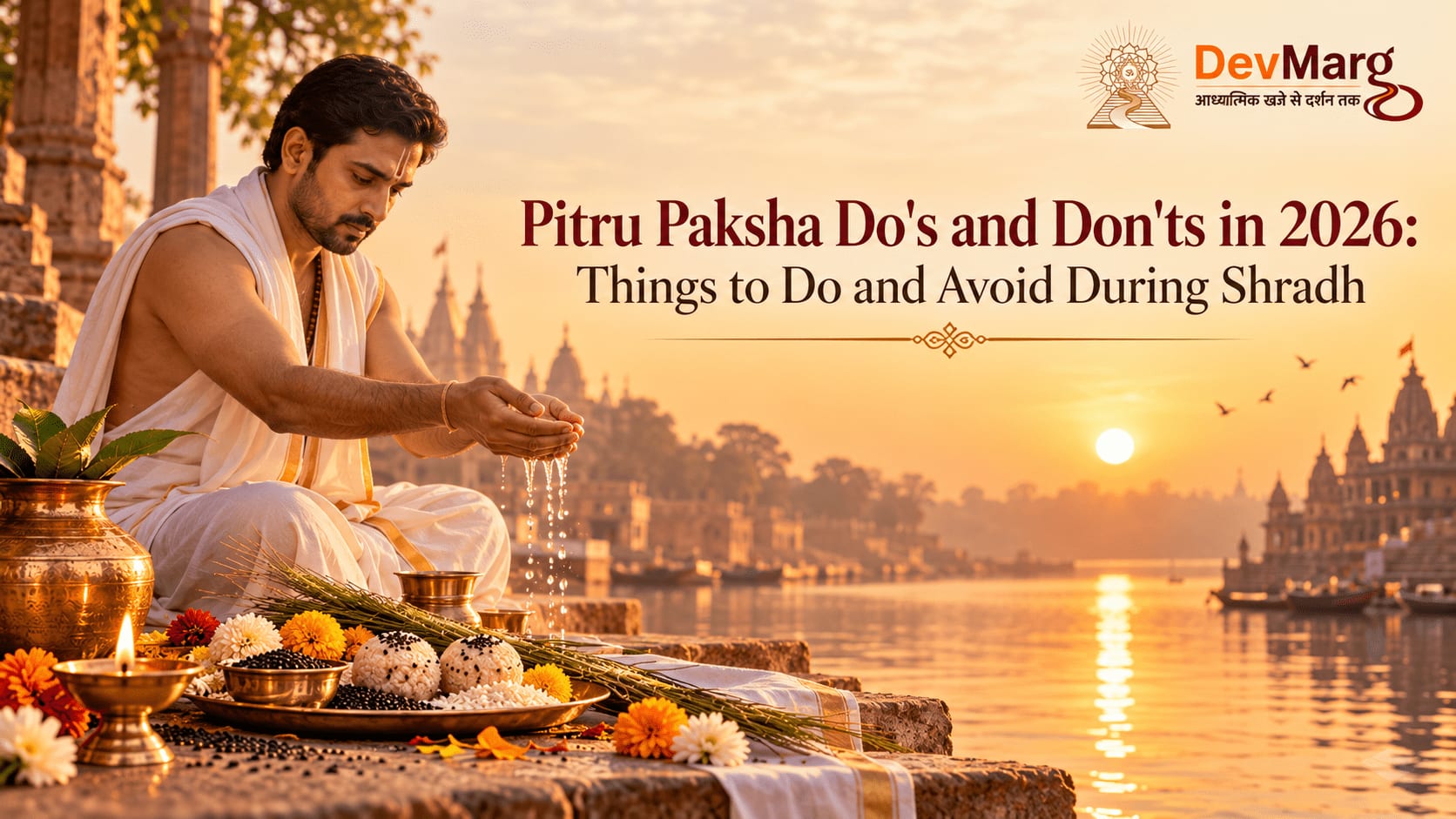
Pitru Paksha Do's and Don'ts in 2026: Things to Do and Avoid During Shradh
Every year, for about sixteen days, Hindu homes turn their attention to the ones who came before them. A plate of kheer is kept aside for the crows. Water mixed with black sesame is poured with folded hands. Grandparents' photos are cleaned and garlanded. This is Pitru Paksha, the fortnight of remembering our ancestors.
Most families know the basics. The confusion starts with the smaller questions. Can we buy a new phone? Can we get a haircut? Is it okay to attend a friend's engagement? This guide answers those questions in plain language, with the traditional reason behind each rule, so you can observe Shradh with understanding and not just out of habit.
Quick answer: During Pitru Paksha, families perform Shradh, tarpan and pind daan for their ancestors on the right tithi, keep a simple sattvic lifestyle, feed Brahmins, cows, crows and the needy, and give daan. People usually avoid non-vegetarian food, onion, garlic, alcohol, new purchases, weddings, griha pravesh and other celebrations, and they avoid anger, arguments and disrespect towards elders.
Pitru Paksha 2026: Saturday, 26 September to Saturday, 10 October 2026, ending on Sarva Pitru Amavasya.

What Is Pitru Paksha?
Pitru Paksha is a 16-lunar-day period in the Hindu calendar dedicated to pitrs, or departed ancestors. It begins on Bhadrapada Purnima and ends on Ashwin Amavasya, known as Sarva Pitru Amavasya or Mahalaya Amavasya. During these days, families perform Shradh rituals to offer food, water and prayers to three generations of ancestors.
It is also called Shradh Paksha, Mahalaya Paksha and, in North India, Kanagat or Sorah Shradh. The word Shradh comes from shraddha, meaning faith. The ritual is an act of faith and gratitude, not a show. If you want the full meaning of the rites, read our guide on Shraddha and Pind Daan for ancestors.
Pitru Paksha 2026: Key Dates
Pitru Paksha 2026 begins on 26 September with Purnima Shradh and ends on 10 October with Sarva Pitru Amavasya. Sharad Navratri starts the very next day.
| Occasion | Date (2026) | Who it is for |
|---|---|---|
| Purnima Shradh | Saturday, 26 September | Ancestors who passed away on Purnima tithi |
| Pratipada Shradh (paksha begins) | Sunday, 27 September | Ancestors who passed away on Pratipada |
| Navami Shradh (Matru Navami) | Sunday, 4 October | Traditionally observed for mothers and married women of the family |
| Chaturdashi Shradh | Friday, 9 October | Traditionally kept for those who died in accidents or sudden, untimely deaths |
| Sarva Pitru Amavasya | Saturday, 10 October | All ancestors, especially when the death tithi is unknown or was missed |
| Sharad Navratri begins | Sunday, 11 October | Start of the Navratri festive season. See our Sharad Navratri guide |
Tithi timings shift by city, and some panchangs place a tithi one day earlier or later. Always confirm your family's Shradh date on the DevMarg Hindu calendar or with your family purohit. New to tithis? Our panchang reading guide explains them simply.
Why Is Pitru Paksha Important?
Pitru Paksha matters because Hindu tradition teaches that every person carries a debt to their ancestors, called pitru rin. We owe our life, family name, values and even our body to those who came before us. Shradh is the way this debt is acknowledged with gratitude.
Texts such as the Garuda Purana, the Markandeya Purana and the Dharma Shastras describe Shradh in detail. The Mahabharata also carries a well-known story linked to this period. After his death, Karna is said to have received gold and jewels as food in the heavenly realm. When he asked why, he was told that he had donated gold all his life but never offered food to his ancestors. He was allowed to return to earth for this fortnight to offer food and water in their memory. Many families see this story as the origin of the tradition.
On a human level, Pitru Paksha is also about family. Children watch their parents offer tarpan and ask who the names belong to. Stories get retold. Old recipes that a grandmother loved get cooked again. That quiet act of remembering keeps a family connected across generations.
Pitru Paksha Do's: What You Should Do During Shradh
In short, the main do's of Pitru Paksha are to perform Shradh on your ancestor's tithi, offer tarpan with black sesame and water, cook sattvic food, feed Brahmins, cows and crows, and give charity. The table below explains each practice and why it is followed.
| Do this | Why it matters |
|---|---|
| Perform Shradh on the correct tithi | Shradh is done on the lunar date (tithi) on which the ancestor passed away, not the calendar date. If you do not know it, Sarva Pitru Amavasya covers all ancestors. |
| Offer tarpan every day if possible | Offer water mixed with black sesame (til), barley and kusha grass while facing south. Water has a special place in Hindu rituals; read more on water in Hindu culture. |
| Do the ritual in the afternoon | The aparahna kaal (roughly between late morning and mid-afternoon) is traditionally the best time. Kutup and Rohina muhurat fall in this window. |
| Cook simple sattvic food | Prepare fresh, home-cooked vegetarian food without onion and garlic. Kheer, puri, seasonal sabzi and dal are common. See our sattvic diet guide. |
| Keep portions for cow, crow, dog and ants | This is called panch bali. Crows are believed to carry offerings to the pitrs, and the cow is honoured as a mother figure. Read why Hindus revere the cow. |
| Feed a Brahmin or the needy | Offering a meal and dakshina to a learned Brahmin is the traditional practice. Feeding the poor, the elderly or a gaushala is equally respected today. |
| Give daan (charity) | Common daan items include food grains, clothes, black sesame, jaggery, ghee, footwear, umbrellas and utensils. Give with respect and without showing off. |
| Light a diya facing south | Many families light a sesame or ghee lamp in the evening facing south, the direction linked to the pitrs. Know why we light a diya. |
| Chant and read scripture | Recite Vishnu names, the Gita or the Garuda Purana. Simple options: Om Namo Narayanaya and chapters of the Bhagavad Gita. |
| Keep the home and mind calm | Keep the house clean, speak gently and spend some time remembering your ancestors with gratitude. The feeling behind the ritual matters more than its size. |
Pitru Paksha Don'ts: Things to Avoid During Shradh
The main don'ts of Pitru Paksha are avoiding non-vegetarian food, onion, garlic and alcohol, postponing weddings, griha pravesh and big purchases, avoiding haircuts for the person doing Shradh, and staying away from anger and arguments. Here is the full list with the reasoning behind each.
| Avoid this | Traditional reason |
|---|---|
| Non-vegetarian food, alcohol and tobacco | These are considered tamasic and go against the purity expected during a ritual for the departed. |
| Onion, garlic and certain grains | Onion and garlic are avoided in Shradh food. Many families also avoid masoor dal, brinjal and some other items, though the list differs by region and community. |
| Weddings, engagements and griha pravesh | Pitru Paksha is a period of remembrance, so auspicious beginnings are usually postponed. Plan a griha pravesh after Navratri begins. |
| Buying gold, a vehicle, property or new clothes | Tradition treats this as a time for giving, not acquiring. Many people delay big purchases until Navratri. |
| Haircuts, shaving and nail cutting | The person performing Shradh usually avoids these through the fortnight. Some families follow it only on the Shradh day itself. |
| Using iron utensils in the ritual | Copper, brass, silver or leaf plates (pattal) are preferred for cooking and serving the Shradh meal. |
| Performing Shradh at night | The ritual is meant for daytime, ideally the afternoon. Evening and night are avoided. |
| Anger, fights and harsh words | Quarrels at home, especially disrespect towards elders, are considered the opposite of what Pitru Paksha stands for. |
| Turning away a guest or an animal | It is believed that ancestors may visit in any form. Do not insult anyone who comes to your door asking for food. |
| Eating before the offering | The family eats only after the food has been offered to the pitrs, the Brahmin and the animals. |
What to Eat and What Not to Eat During Pitru Paksha
Food during Pitru Paksha should be fresh, vegetarian, sattvic and free of onion and garlic. The Shradh meal often includes dishes the ancestor enjoyed, which makes the offering personal.
| Commonly cooked for Shradh | Commonly avoided |
|---|---|
| Kheer (rice cooked in milk) | Meat, fish and eggs |
| Puri, roti or rice | Onion and garlic |
| Seasonal sabzi such as lauki, kaddu and arbi | Masoor dal and brinjal (in many regions) |
| Moong or urad preparations (varies by region) | Stale, leftover or reheated food |
| Black sesame, jaggery and ghee | Alcohol and tobacco |
| The ancestor's favourite vegetarian dish | Very spicy or heavily fried food |
If you keep a fast on the Shradh day, our guide to Hindu fasting rules explains the common types of vrat.
Common Questions: Can I Do This in Pitru Paksha?
Many everyday doubts come up during Shradh. This quick table gives the most widely followed view. Your family custom always comes first.
| Activity | Traditional view | Practical note |
|---|---|---|
| Go to work or travel | Allowed | Daily life continues. Plan travel around your Shradh date. |
| Visit temples and do daily puja | Allowed | Your regular daily puja at home continues. Many people chant Vishnu mantras more during this time. |
| Celebrate a birthday | Keep it simple | Most families skip big parties but may cut a small cake or feed the needy instead. |
| Buy daily-need items | Allowed | Groceries, medicines and essentials are fine. Only big, celebratory purchases are delayed. |
| Book a wedding venue or sign a deal | Usually postponed | Many people wait for an auspicious muhurat after Navratri begins. |
| Start a new job already fixed | Depends on family | If the date cannot move, join with a short prayer to your ancestors. |
| Women performing Shradh | Accepted in many families | When there is no son, a daughter, wife or daughter-in-law can perform it. Many priests now support this. |
How to Perform Shradh at Home: Step-by-Step
A simple Shradh at home can be done in about an hour. Begin with a bath, offer tarpan with water and black sesame facing south, perform the pind offering, set aside food for the animals, feed a Brahmin or someone in need, and give daan. Here is the order most families follow.
- Prepare yourself. Wake early, bathe and wear clean, simple clothes, usually white or light-coloured. The person doing Shradh stays on a light, sattvic diet that day.
- Set up the space. Clean a spot in the southern part of the house or courtyard. Place a photo of the ancestor, a diya, kusha grass, black sesame, rice, flowers, water and a copper vessel. Know more about kusha and other sacred plants.
- Take the sankalp. Hold water, sesame and kusha in your right hand. Say your name, gotra, the ancestor's name and your intention to perform Shradh.
- Offer tarpan. Face south. Pour water mixed with black sesame from your palm, letting it flow over the thumb side. Call the names of your father, grandfather and great-grandfather (and the maternal side, as per custom).
- Offer pind. Make small balls of cooked rice mixed with sesame, ghee and honey. Place them on kusha grass and offer them with a prayer.
- Do panch bali. Keep aside portions of the meal for the cow, crow, dog, ants and the devas before anyone eats.
- Feed and give. Serve a Brahmin or a needy person with respect. Offer dakshina, clothes or grains as per your means.
- Close with prayer. Ask forgiveness for any mistakes, thank your ancestors and then eat the prasad with your family.
Can't do it yourself? Families living abroad or away from home can ask a trusted pandit to perform Shradh on their behalf on the correct tithi. DevMarg can help you connect with verified pandits and arrange puja and chadhava at sacred sites, so the ritual is done properly even when you cannot be present.
Best Time to Perform Shradh
The best time for Shradh is the aparahna kaal, the afternoon window on your ancestor's tithi. Kutup muhurat and Rohina muhurat, which fall around midday, are considered especially suitable. Morning is fine for tarpan, but the main Shradh meal and pind offering are traditionally done in the afternoon.
Some days carry special weight. Sarva Pitru Amavasya is the most important day of the fortnight because it covers every ancestor. To understand why Amavasya is linked with the pitrs, read Amavasya and Purnima explained. For exact daily timings, check DevMarg Muhurat.
Best Places for Pind Daan and Shradh in India
Shradh can be performed at home, but certain tirthas have been known for ancestral rites for centuries. Gaya in Bihar is the most famous, followed by Varanasi, Prayagraj, Haridwar, Badrinath and Trimbakeshwar.
| Place | State | Why devotees go there |
|---|---|---|
| Vishnupad Temple, Gaya | Bihar | Considered the foremost place for pind daan, on the banks of the Falgu river. The Gaya Pitru Paksha Mela draws large crowds. |
| Varanasi (Kashi) | Uttar Pradesh | Shradh on the Ganga ghats is believed to give peace to the departed. See Varanasi, the sacred city. |
| Triveni Sangam, Prayagraj | Uttar Pradesh | The meeting point of the Ganga, Yamuna and the unseen Saraswati is a revered site for tarpan. |
| Har Ki Pauri, Haridwar | Uttarakhand | Families come here for asthi visarjan and Shradh, and priests often maintain family records going back generations. |
| Badrinath Temple | Uttarakhand | Brahma Kapal, on the Alaknanda near the temple, is a known site for pind daan. |
| Trimbakeshwar, Nashik | Maharashtra | Known for Narayan Nagbali and Tripindi Shradh rituals, often done for pitru dosh related concerns. |
What Happens If Shradh Rituals Are Not Performed for Ancestors?
According to Hindu belief, when Shradh is not performed, the ancestors do not receive the food and water offerings meant for them, and the family's debt to them (pitru rin) remains unpaid. Traditional texts say the pitrs may feel unsatisfied, and some families link this to what is called pitru dosh. It is best understood as a spiritual duty left incomplete, not a curse.
What the scriptures say
The Garuda Purana and other Puranas describe Shradh as the means by which ancestors are nourished and helped on their onward path. In the first chapter of the Bhagavad Gita, Arjuna himself voices the worry that when families break down and offerings of pinda and water stop, the ancestors suffer. This shows how deeply the practice was woven into family duty even in the time of the Mahabharata.
The belief around pitru dosh
In Jyotish, pitru dosh is described as a sign that the ancestors are not at peace. Some families associate it with repeated obstacles, delays in marriage or disharmony at home. These are beliefs, and their interpretation varies between astrologers and traditions. They should not be used to create fear, and no ritual should be sold as a guaranteed fix.
A more balanced way to see it
Many acharyas explain it simply: Shradh benefits the living as much as the departed. Missing it means missing a chance to express gratitude, give to others and keep family memory alive. Scriptures also give generous room for people who genuinely could not perform the rites.
| If this happened | What tradition suggests |
|---|---|
| You missed your ancestor's tithi | Perform Shradh on Sarva Pitru Amavasya, which covers all ancestors. |
| You don't know the date of death | Sarva Pitru Amavasya is meant exactly for this situation. |
| You live abroad or cannot travel | Ask a pandit to perform it on your behalf, or offer simple tarpan wherever you are. |
| You cannot afford a full ritual | Scriptures accept even water, sesame and a sincere prayer. Feeding one hungry person or a cow is also counted as seva. |
| Shradh has been skipped for years | Families often do pind daan at Gaya or Tripindi Shradh once, and then continue the yearly practice. |
The heart of the matter is simple: sincere remembrance, done with whatever means you have, is what the tradition asks for.
Frequently Asked Questions
What should we not do during Pitru Paksha?
Avoid non-vegetarian food, onion, garlic and alcohol, postpone weddings, engagements and griha pravesh, delay big purchases like gold or vehicles, and avoid anger and quarrels at home. The person doing Shradh usually avoids haircuts and shaving.
Can we buy new things during Pitru Paksha?
Daily essentials are fine. Traditionally, people postpone buying gold, property, vehicles and new clothes for celebrations because Pitru Paksha is seen as a time for giving rather than acquiring. Many families wait for Navratri.
Can we cut hair or shave during Pitru Paksha?
The person performing Shradh traditionally avoids cutting hair, shaving and cutting nails during the fortnight. Other family members often follow it too, but customs differ, so follow what your elders practise.
Why do we feed crows during Shradh?
Crows are believed to be messengers that carry food to the pitrs. When a crow eats the offering, families take it as a sign that the ancestors have accepted it. Food is also kept for the cow, dog and ants as part of panch bali.
Who can perform Shradh?
Traditionally the eldest son performs it, followed by other sons or grandsons. When there is no son, a daughter, wife, daughter-in-law or another close relative can perform it. Many priests today accept women performing Shradh.
What if I don't know the tithi of my ancestor's death?
Perform Shradh on Sarva Pitru Amavasya, which falls on 10 October in 2026. This day is meant for all ancestors, including those whose date of death is unknown.
Can Shradh be done at home?
Yes. A simple Shradh with tarpan, pind offering, panch bali and feeding a Brahmin or needy person can be done at home. Many families also perform pind daan at tirthas like Gaya or Varanasi once in their life.
Is Pitru Paksha inauspicious?
Pitru Paksha is not a bad or unlucky time. It is a sacred period set aside for ancestors, so new beginnings are postponed out of respect. Prayer, charity and scripture reading during these days are considered especially meaningful.
Honour your ancestors this Pitru Paksha. Check your Shradh tithi on the DevMarg calendar, plan a pind daan visit to Gaya, or watch live darshan from sacred temples.
Conclusion
Pitru Paksha is not about rules for the sake of rules. Every do and don't points to the same idea: slow down, live simply for a few days, give generously and remember the people whose lives made yours possible. Offer what you can with a clean heart, whether it is a full Shradh at Gaya or a handful of water and sesame at home.
To learn more about the rites that follow a person's passing, read our guide on Hindu death rituals and the 16 samskaras of Hindu life.
Editor's note: Shradh customs vary between regions, communities and family lineages. Food restrictions, the number of generations honoured and the role of women differ across North, South, East and West India. This article shares the most widely followed practices. Please follow your family tradition and consult your purohit for your specific ritual.
Om Pitru Devaya Namah. May your ancestors be at peace.